Garden Farmer
Beefsteak
Beefsteak
Couldn't load pickup availability
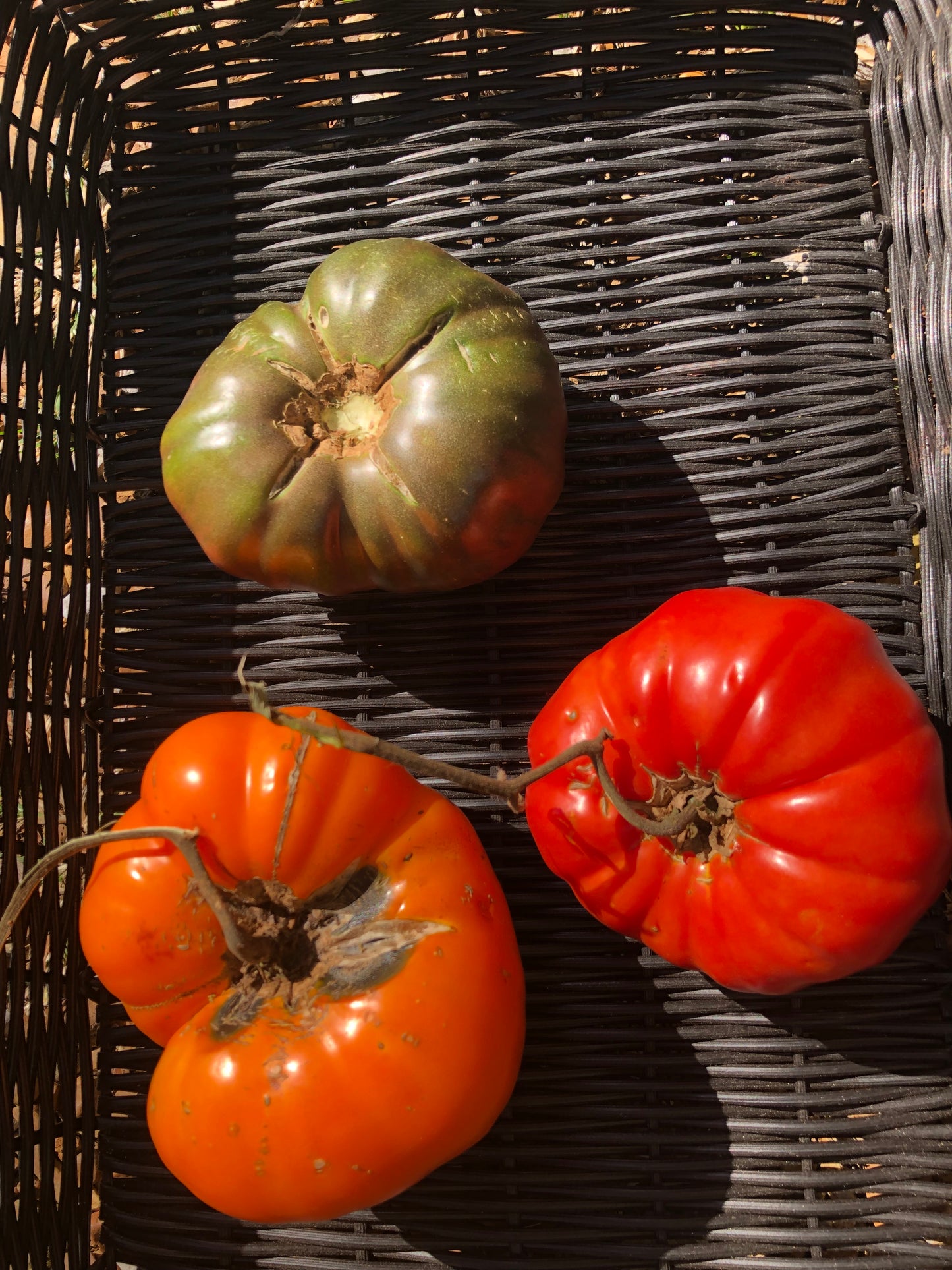
Beefsteak is a best of the best, tomato, by far with a unique flavor, texture, and red color. The beefsteak masterfully resembles a cartoonish archetypical tomato. History says this is a Victorian hold over with a name and look as far back as 1882. It’s a tough plant to grow, splitting into a giant dual-leader dominate tree like profile in the intensity of Summer. It needs a lot of room and nutrients to fill out. The fruits have a blood red interior, dappled lightly with seeds beneath a blood translucent compartmentalized gel cell network. The bite is a balanced flesh to juice ratio that makes it perfect for sandwiches, preparation, and grilling. Finding true beefsteak seeds became a priority after years of buying seeds or starts that were evidently crossed to acidic-water tasting tomatoes. Mislabeled seeds and hybrids are common amongst seed sellers, but not ours! So, after many thousands of ‘beefsteak’ types, selections began with finding boat shape, and round rippled examples that are historically accurate depictions of ‘beefsteak’. The distinctive ridges on the fruit shoulders set it apart from a smooth skin hybrid, so fruit are best set on their bottom for maximum shelf life. Seeds were selected specifically from intact fruits to minimize cracking tendencies. You can grill this tomato and it holds shape, slice in large slices but won’t soak your bread. The flavor is not just acidic, it has a resonating herbal, more salty than sweet flavor like that of savory, tomato soup.
Cultivating Beefsteak is very similar to Kellogg Breakfast and Brandywine, as their growth rate, plant profile, size and shape are more like a dual leader tree, than a vigorous sprawling bush of vines. These are true beefsteak tomato seeds, presenting a perfect red triangular shape tomato that has a bulging rump on one end, and points to the other. Suckering early, rather than hard pruning later, is a preference I was taught to do. These tomatoes are novelty gargantuan in size, with a great firm skin and excellent shelf life. Little to no cracking, odd shapes, nor low yields. The vine and fruit clusters do need multiple stiff and tall supports. These plants need more than 18 square feet to branch out. Lean vines against wooden or bamboo stakes rather than crammed together twisted in twine, tangling and suffocating vines. Set this tomato on your windowsill to watch the many tints of red, scarlet, and crimson bleed out, just as the flavor does soon after cutting through to that wooden block, into a raw weeks-old, beefsteak.
Share